
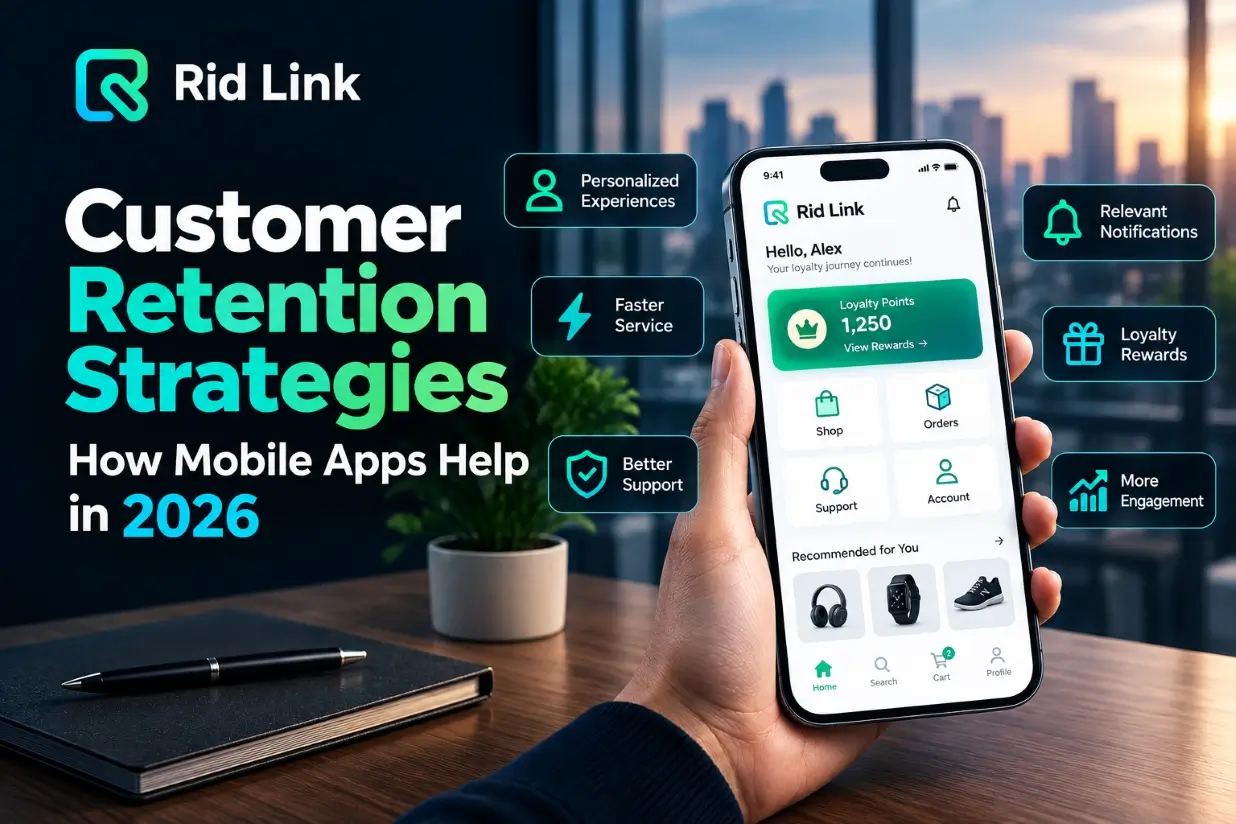
Getting a customer to make a first purchase is only the beginning; improving long-term customer retention is the real challenge.
In 2026 customers expect businesses to make things easier. They want faster service, simple communication, convenient purchasing, and experiences that feel relevant to them. A well-built mobile app can bring many of these things together in one place.
But simply having an app does not guarantee customer retention. If the app is slow, confusing, unreliable, or offers little value, customers have no strong reason to keep using it.
The real value comes from creating an experience that saves time, removes unnecessary steps, and gives customers useful reasons to return.
What Is Customer Retention?
Customer retention is a business’s ability to keep existing customers coming back instead of losing them to competitors.
Customer acquisition brings new people into a business, but retention determines whether those customers continue buying, booking, subscribing, or using the service over time.
Several factors influence customer retention, including product quality, customer service, convenience, personalization, loyalty rewards, communication, and overall reliability.
A mobile application can bring many of these elements together in a single experience that customers can access whenever they need it.
How Mobile Apps Improve Customer Retention
1. Mobile Apps Make Everyday Tasks Easier
Convenience is one of the strongest reasons customers continue using a mobile app.
Think about the difference between opening a browser, finding a website, logging in, searching for something, and entering the same information again compared with opening an app where important features are already available.
A good mobile app can remember preferences, save account details, simplify checkout, provide order tracking, and make customer support easier to reach.
For example, an online shopping customer might open an app to reorder something they purchased last month. A restaurant customer can use an app to book a table. A service customer can check an appointment without calling the business.
These small improvements matter.
When customers can complete a task in a few simple steps, they have fewer reasons to search for another option.
2. Relevant Push Notifications Can Bring Customers Back
Push notifications can be valuable for customer engagement, but only when businesses use them carefully.
Sending the same promotional message to everyone can quickly become annoying. Too many irrelevant notifications may cause users to disable notifications or remove the app altogether.
A better approach is to send messages based on actual customer activity.
An abandoned cart reminder can help someone complete a purchase. A delivery notification keeps a customer informed. An appointment reminder can prevent missed bookings. A relevant offer can bring back someone who has not purchased recently.
Timing matters as well.
A useful notification feels like part of the service. A constant stream of promotions feels like advertising.
3. Personalization Creates More Relevant Experiences
Customers do not want to spend time searching through information that has nothing to do with them.
Mobile apps can use information such as purchase history, saved preferences, browsing activity, and previous interactions with appropriate consent to make the experience more relevant.
An online store can recommend products based on previous purchases. A fitness application can provide suggestions based on activity. A booking platform can make frequently used services easier to find.
Personalization should make the customer’s experience simpler rather than making them feel monitored.
This is why responsible data collection matters. Businesses should be transparent about how customer information is used and give users appropriate control over their data.

4. Mobile Loyalty Programs Encourage Repeat Purchases
Loyalty programs can give customers another reason to return.
Physical loyalty cards can get lost, while discount codes buried in emails may never be seen. A mobile app keeps points, rewards, membership information, and available offers in one convenient place.
In addition, offering exclusive milestones and rewards encourages repeat purchases.
Keeping the system simple makes a big difference. Customers should be able to see what they have earned and understand how they can receive their next reward.
When loyalty benefits are easy to access, customers are more likely to use them.
5. Better Customer Support Improves Customer Retention
A frustrating support experience can quickly damage customer trust.
If customers have to search for an email address, wait on hold, or repeatedly explain the same problem, they may decide to take their business elsewhere.
Mobile apps can make support easier through in-app messaging, FAQs, help centers, service requests, and account-specific assistance.
This can be especially useful for businesses handling deliveries, bookings, subscriptions, financial services, online purchases, or ongoing customer accounts.
The goal is simple: make it easy for customers to get help when they need it.
Resolving problems quickly can prevent a small issue from becoming a reason to leave.
6. The Post-Purchase Experience Matters
Customer retention does not end when a payment is completed.
What happens after the purchase can influence whether someone decides to buy again.
A useful mobile app can provide:
- Real-time delivery tracking
- Digital receipts
- Warranty information
- Product instructions
- Appointment reminders
- Reordering options
- Feedback and support
Imagine ordering a product online and then being able to track the delivery, access the receipt, contact support, and reorder the same product without searching through emails or visiting another website.
That creates a smoother customer experience and gives people another practical reason to keep using the app.
7. Frequent Brand Interactions Boost Customer Retention
A website may only be visited when a customer needs something. A mobile app can become part of a customer’s routine when it provides genuine everyday value.
For example, a customer opens the app to check an order, sees a useful recommendation, completes an action, earns a loyalty reward, and returns later when they need something else.
These simple interactions create more opportunities for a business to stay useful between purchases.
The important point is not to force customers to open the app. Give them a reason to want to open it.
8. Analytics Help Businesses Understand Why Customers Leave
Customer churn rarely happens without any warning.
Changes in customer behavior can show that someone is becoming less engaged. A customer who once opened an app regularly may suddenly stop using it. Another person might repeatedly abandon checkout or stop using an important feature.
Mobile analytics can help businesses identify these patterns.
Teams can monitor:
- Repeat purchase behavior
- Session frequency
- Feature usage
- Checkout abandonment
- Customer inactivity
- Engagement with notifications
This information can help businesses improve their product and customer journey.
The purpose is not to collect as much data as possible. It is to understand where customers experience problems and make those areas better.

How to Build a Mobile App That Supports Customer Retention
A retention-focused app should not simply copy a company’s website onto a smaller screen.
Before development begins, businesses should understand where customers experience friction and which tasks they perform most often.
An experienced mobile app development company can help turn those requirements into a practical and scalable product.
A strong development process starts with understanding customer needs, planning useful features, creating a simple user experience, developing the application, testing it properly, and improving it after launch.
The most important features should solve real customer problems.
For an online store, that could mean one-tap reordering and easy order tracking. Meanwhile, a service business might focus on appointment management and instant support. Similarly, subscription-based businesses can prioritize simple account management and payment options.
Performance is equally important.
Slow loading, confusing navigation, crashes, and complicated onboarding can quickly damage the customer experience. A reliable app should feel fast, straightforward, and easy to use.
Businesses looking for custom mobile app development should also consider security scalability; they keep it because it is useful.
A successful mobile experience should make common tasks easier, remember relevant preferences, provide helpful information, and reduce the amount of work customers need to do.
This is also where good mobile software development makes a difference. The technology behind the application should support a smooth experience without getting in the customer’s way.
Before adding another feature, businesses should ask a simple question:
Will this make the customer’s next interaction easier or more useful?
If the answer is yes, the feature may have a real place in the product. If not, keeping the experience simple may be the better decision.
Final Thoughts
Mobile apps can play an important role in customer retention, but the app itself does not create loyalty.
Value does.
When an app saves customers time, makes purchases easier, provides useful communication, simplifies support, and rewards repeat business, customers have a practical reason to return.
That should be the focus for businesses in 2026.
The goal is not simply to collect more app downloads. It is to create a mobile experience that customers genuinely find useful.
When an app becomes a convenient part of the customer’s routine, returning to the business becomes much easier.