
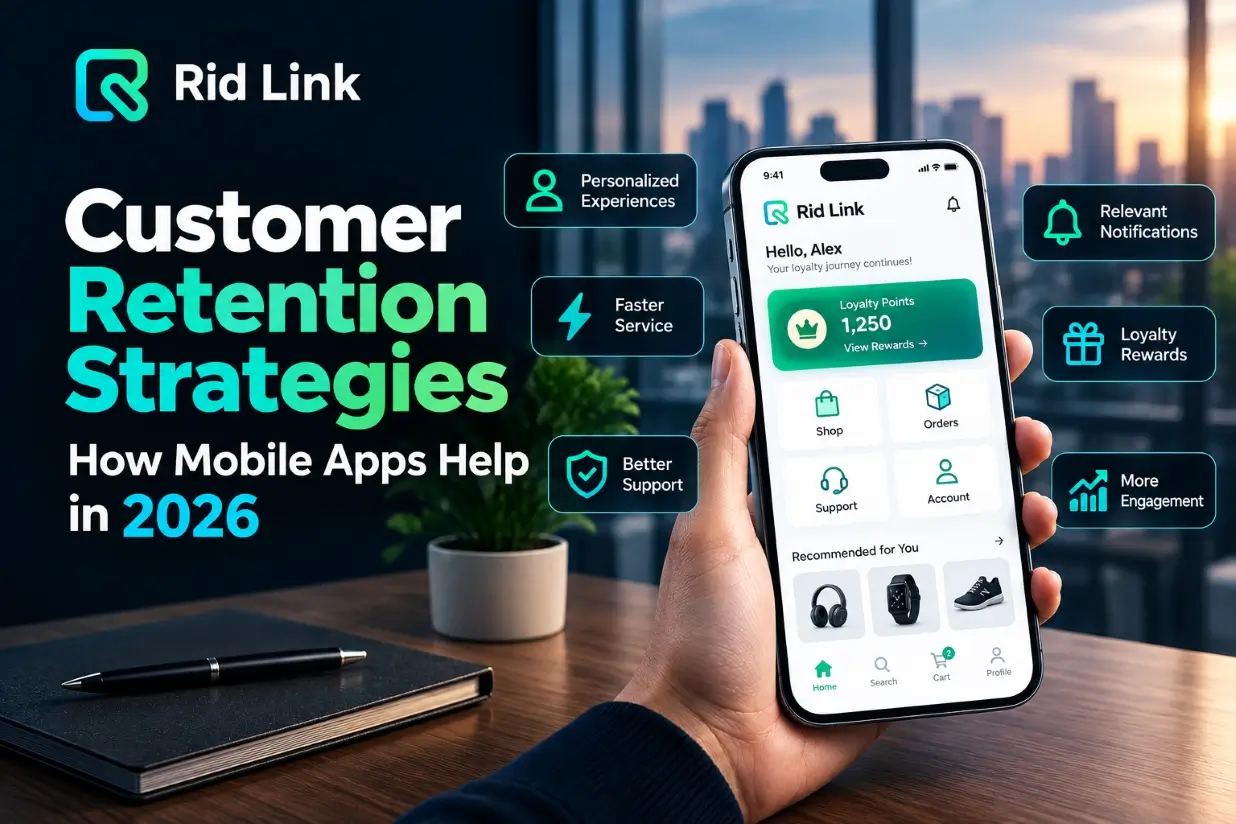
Customer retention is one of the most important factors in sustainable business growth. While attracting new customers helps businesses expand, keeping existing customers engaged can encourage repeat purchases and long-term relationships.In 2026, using effective mobile app customer retention strategies is helping businesses improve customer engagement, deliver personalized experiences, and build customer loyalty.
A well-designed mobile application gives customers convenient access to products, services, support, and personalized offers. By investing in mobile app development, businesses can create digital experiences that encourage customers to return. From push notifications to loyalty programs, the right mobile app retention strategies can help businesses improve engagement and customer satisfaction.
Why Customer Retention Matters for Businesses
Customer retention measures how effectively a business maintains relationships with existing customers over time. A strong customer retention strategy can support repeat purchases, customer loyalty, and long-term business growth.
Businesses can use mobile applications to simplify customer interactions, provide relevant updates, and make their services easier to access. Unlike communication channels that depend entirely on third-party platforms, a mobile app can provide a dedicated experience for registered users.
For companies looking to improve customer retention, the goal should be to deliver consistent value rather than simply encourage customers to open an application.
1. Personalization in Mobile Apps
Personalized mobile app experiences can help businesses make their services more relevant to individual customers. Recommendations, customized offers, and content based on customer preferences can encourage continued engagement.
For example, an e-commerce application can recommend products related to previous purchases, while a service-based business can display relevant appointment options.
Businesses should use customer information responsibly, explain their data practices, and respect privacy preferences. Relevant personalization can improve the customer experience without overwhelming users with unnecessary messages.
2. Push Notification Marketing
Push notification marketing allows businesses to send timely updates directly to customers who have enabled notifications. These messages can include order updates, appointment reminders, product announcements, and personalized offers.
An effective mobile app engagement strategy focuses on sending relevant notifications at appropriate times. Too many messages can frustrate customers and lead them to disable notifications or uninstall the application.
Segment your audience according to their preferences and activity. Test different messages and measure results to understand which notifications encourage meaningful engagement.
3. Mobile App Loyalty Programs
Mobile app loyalty programs reward customers for repeat purchases and ongoing engagement. Businesses can introduce loyalty points, exclusive discounts, membership benefits, and referral rewards through their applications.
For example, a retail company can reward eligible purchases with points that customers can redeem for future discounts. This provides customers with a clear benefit for returning.
A successful customer loyalty program should have simple rules, valuable rewards, and transparent tracking. Businesses should measure repeat purchases and retention rates to determine whether their loyalty programs are effective.
4. Improve Mobile App User Experience
A complicated or unreliable application can discourage customers from returning. Mobile app user experience (UX) should therefore be a priority when planning customer retention strategies.
Keep navigation simple, make important features easy to find, and reduce unnecessary steps in common tasks. Optimize loading speed, fix technical errors, and ensure the app works across supported devices.
Professional mobile app development services can help businesses build applications with intuitive interfaces, reliable functionality, and scalable architecture. Regular testing and customer feedback can identify usability problems before they affect more users.
5. Customer Engagement Through In-App Support
Accessible customer support is another important part of customer engagement and retention. Mobile apps can provide in-app messaging, help centres, frequently asked questions, and support request forms.
Automated chat features can answer common questions, while more complex requests can be transferred to a support representative.
Businesses should monitor customer feedback and recurring complaints. Resolving issues quickly can improve satisfaction and give customers greater confidence in continuing to use the application.
6. Mobile App Analytics and Customer Retention Metrics
Data helps businesses understand how customers interact with their applications. Mobile app analytics can reveal usage patterns, popular features, repeat purchases, and declining engagement.
Important customer retention metrics include:
- Customer retention rate
- Customer churn rate
- Daily and monthly active users
- Repeat purchase rate
- Customer lifetime value
- App engagement and feature adoption
Monitoring these metrics over consistent periods helps businesses identify problems and evaluate the effectiveness of new features or marketing campaigns.
Businesses should use analytics responsibly and comply with applicable privacy requirements when collecting and processing customer data.
7. Customer Re-Engagement Strategies
Some users become inactive because their needs change, they experience technical difficulties, or they forget about an application. Mobile app re-engagement strategies can encourage these customers to return.
Businesses can send relevant product updates, helpful reminders, or personalized offers to eligible users. Before launching a campaign, identify inactive customer groups and consider why they stopped engaging.
Avoid sending excessive messages or using misleading promotions. A useful re-engagement campaign should provide a genuine reason to return and respect customers’ communication preferences.
How Ridlink Supports Mobile App and Digital Growth
Ridlink helps businesses strengthen their digital presence through website development and digital solutions. Businesses planning customer-focused applications should consider functionality, user experience, performance, security, and integration requirements from the beginning.
A well-planned digital platform can make it easier for customers to access services, find information, and interact with a business. Choosing the right technology depends on the company’s objectives, audience, and operational needs.
Explore Ridlink’s website development services to learn more about building a professional digital presence. If Ridlink offers a dedicated mobile app development service page, link to that page using the anchor text mobile app development services.
Conclusion
Effective customer retention strategies using mobile apps in 2026 focus on creating valuable, convenient, and personalized customer experiences. Push notification marketing, mobile app loyalty programs, improved user experience, customer support, and mobile app analytics can all contribute to stronger customer relationships.
Businesses should monitor customer retention metrics, collect feedback, and continuously improve their applications based on real user needs. By combining a customer-focused strategy with reliable technology, companies can encourage repeat engagement and support long-term growth.